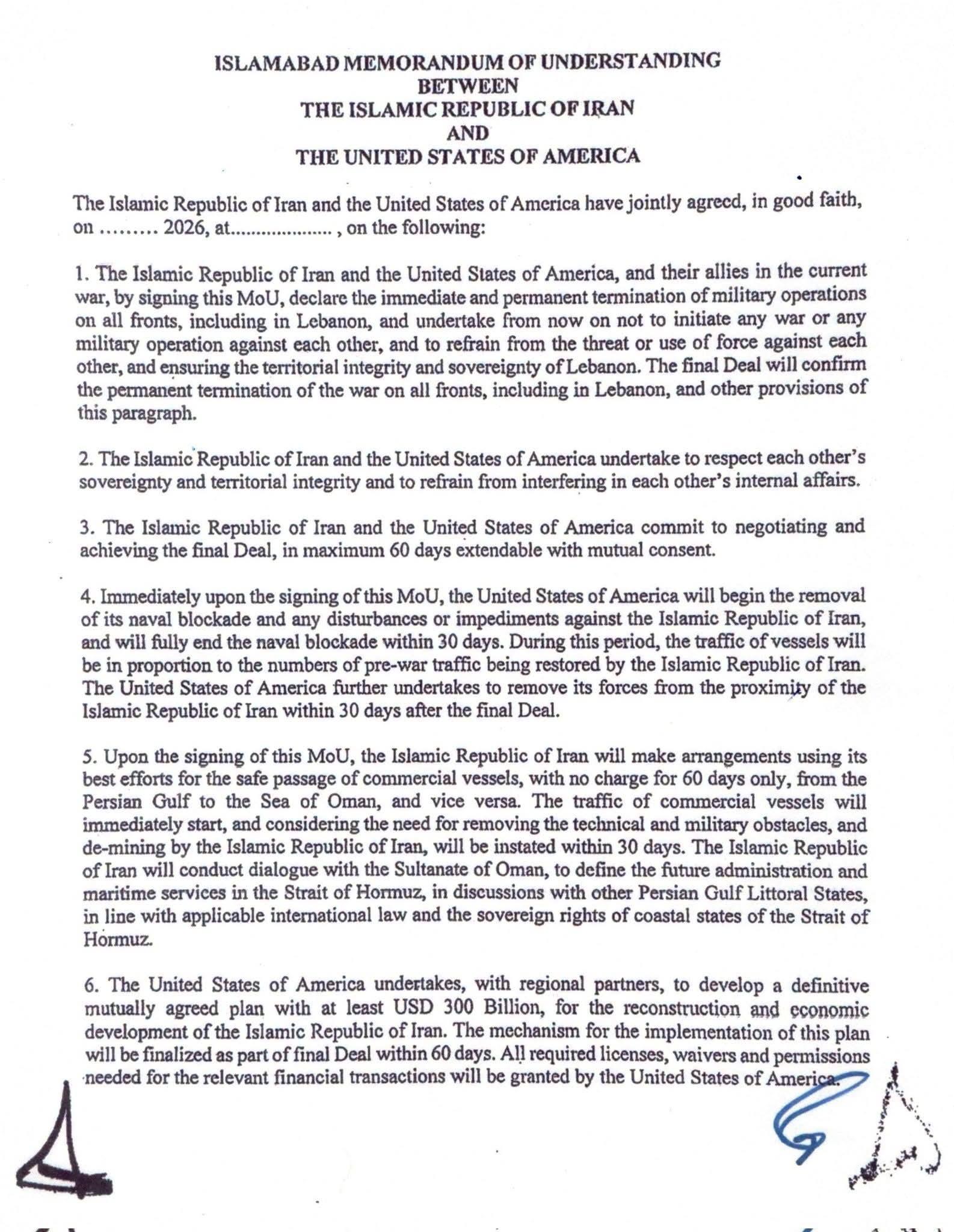
The signing of the Islamabad Memorandum of Understanding (MoU) between the United States and Iran has been hailed as a breakthrough in efforts to end months of conflict and reduce tensions in the Middle East.
Brokered with the support of Pakistan, the agreement establishes a 60-day negotiating framework, commits both sides to ending hostilities and seeks to restore stability in the strategically important Strait of Hormuz.
While officials in Washington have presented the deal as a diplomatic success that curbs Iran's nuclear ambitions and secures freedom of navigation, a closer examination suggests Tehran may have emerged as the agreement's biggest beneficiary.

Under the framework, the United States has agreed to begin lifting its naval blockade of Iranian ports, suspend new sanctions during negotiations and open discussions on broader sanctions relief, including measures affecting Iran's oil exports. Reports also indicate provisions for the release of billions of dollars in frozen Iranian assets.
For an economy battered by years of sanctions, these concessions could provide Tehran with a much-needed financial lifeline long before a final agreement is reached.

The prospect of renewed oil sales alone represents a significant economic victory for the Iranian government.
Perhaps more importantly, the agreement postpones resolution of the most contentious issues surrounding Iran's nuclear programme. Instead of dismantling its nuclear infrastructure, Tehran has merely agreed to maintain the status quo while negotiations continue, leaving many critical questions to be addressed later.
The ceasefire provisions also offer Iran strategic relief. The agreement commits both sides to ending military operations and refraining from future attacks, effectively reducing the immediate threat of further military confrontation.
Critics argue that Washington has granted substantial economic and security incentives upfront in exchange for promises that will only be tested during future negotiations. Some analysts warn that by easing pressure before a final settlement is reached, the United States may have reduced some of its leverage over Tehran.
Supporters of the agreement counter that diplomacy requires compromise and that preventing a wider regional conflict is itself a major achievement. They also note that sanctions relief and other benefits remain tied to Iran's compliance with the terms of the memorandum and any eventual comprehensive agreement.
Nevertheless, the optics of the deal are difficult to ignore. Iran secures a pathway to economic relief, gains access to potentially frozen funds, sees the gradual removal of a naval blockade and avoids immediate demands for sweeping changes to its nuclear programme.
Whether the Islamabad MoU ultimately becomes a lasting peace accord or merely a temporary pause in a decades-long rivalry remains to be seen. For now, however, many observers believe that Tehran leaves the negotiating table with more tangible gains than Washington, making Iran appear to be the early winner of the agreement.This angle reads like an international affairs analysis piece rather than a straight news report, while remaining balanced and evidence-based.