
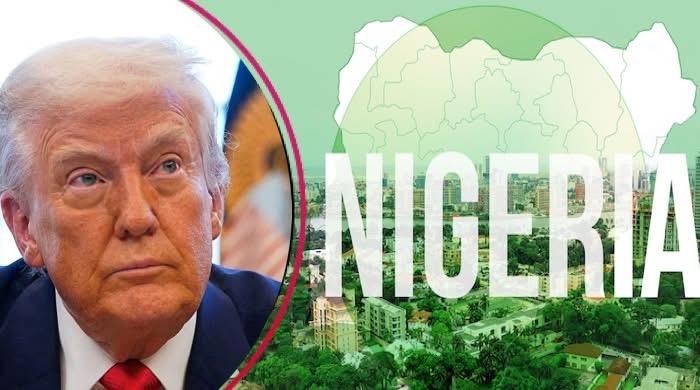

The United States has carried out air strikes targeting Islamic State–linked militants in north-west Nigeria, marking a significant development in international efforts to curb extremist violence in the region.
The strikes were conducted on Christmas Day and were confirmed by US officials, with President Donald Trump stating that the operation targeted fighters linked to the Islamic State who have been responsible for deadly attacks on civilians. According to the US military, the operation focused on militant hideouts in Sokoto State, close to Nigeria’s border with Niger.
US Africa Command said the air strikes were carried out using intelligence aimed at degrading the operational capacity of extremist groups operating in the area. While exact casualty figures were not immediately released, officials indicated that several militants were killed and that no civilian casualties were reported in the initial assessment.
The Nigerian government acknowledged the operation, describing it as part of ongoing security cooperation between Nigeria and the United States. Authorities stressed that extremist violence in the country affects both Muslim and Christian communities and is driven by a complex mix of terrorism, banditry, and long-standing socio-economic challenges.
North-west Nigeria has experienced a sharp rise in attacks by armed groups in recent years, including kidnappings, village raids, and assaults on security forces. Some of these groups have pledged allegiance to international extremist organisations, raising concerns about the expansion of Islamic State influence beyond the country’s northeast, where Boko Haram and its offshoots have been active for over a decade.
Analysts say the US air strikes reflect growing international concern over the spread of extremist networks across West Africa and the Sahel, a region already struggling with instability, weak governance, and humanitarian crises. While foreign military support may weaken militant groups in the short term, experts note that long-term stability will depend on addressing poverty, governance, and local security capacity.
The situation in north-west Nigeria remains fluid, with both Nigerian and US authorities indicating that further actions will depend on developments on the ground.